Trees for Missoula promotes a sustainable, equitable, climate resilient urban forest through education, advocacy, and community engagement.
Action Alert!
Missoula City Council is in the final stages of adopting the new Unified Development Code (UDC) and this is your chance to have your voice heard!
Trees for Missoula is excited to support the inclusion of strong requirements for street trees, tree preservation, landscaping, and green infrastructure in the Unified Development Code, while offering flexibility that will enable more housing opportunities in Missoula's urban core.
We encourage you to advocate for the inclusion of strong landscaping and green infrastructure measures by sending individual emails to your City Council representatives before January 13th or by commenting at one of the upcoming City Council meetings in January.
Feel free to use or incorporate these talking points into your comments:
General Comments
Urban trees and landscaping have myriad climate and health benefits, help reduce urban heat islands, mitigate stormwater runoff, and are critical infrastructure for our community’s climate resilient growth and development. As we build more impervious surfaces and climate impacts become more frequent and severe, it is imperative that we offset these impacts with thoughtful implementation of green infrastructure including tree planting, tree preservation, and landscaping requirements.
Other cities across the country and around the world are implementing green infrastructure measures like green roofs, rain gardens and bioswales, and permeable pavement. Updating the code is an opportunity to enact strong landscaping requirements and will allow Missoula to join other leaders in green solutions and better prepare our community for climate impacts[SD1] .
Policies set forth in community and citywide initiatives like the Parks, Recreation, Open Space & Trails Plan (PROST), Climate Ready Missoula, Stay Cool Missoula, the Urban Forestry Master Management Plan, and the Community Health Improvement Plan (CHIP) enhance climate resilience efforts and support protection of natural areas, waterways, and green spaces as well as quality of life. Incorporating strong landscaping requirements in the UDC reinforces these commitments and is essential to achieving community goals.
Specific Comments on Trees
I’m excited to see that this update prioritizes tree planting, retention, and replacement requirements for new development, as well as a tree planting mitigation payment option for developers, which will directly support Missoula’s Urban Forestry Department.
I appreciate the emphasis on keeping existing trees healthy and alive on site, in order to continue to grow our tree canopy. While we need more new trees planted too, it makes sense to prioritize retaining older / existing trees, as generally they offer more benefits than newly planted trees.
I support boulevard tree planting options, with Option A (developer pays mitigation fee and Parks Dept. plants trees) being the preferred option. I’m supportive of the “payment-in-lieu" to the Parks Department in instances where the site is not appropriate for trees. (Reference: 6-2-01-A - ROW Improvements – Requirements).
I support the street tree requirements for all new non-residential projects and for residential projects that create one or more new dwelling units.
Specific Comments on Landscaping
I support the proposed landscaping percentage requirements set forth by Parks & Rec staff. I encourage you to retain these landscaping requirements and not to reduce them further. The landscaping requirements set forth in the proposed UDC have already been reduced from the current Title 20 landscaping requirements. The landscaping requirements set forth in the proposed UDC provide more flexibility for landscaping, allowing for development to occur in a more efficient way. Further reducing the landscaping requirements will inhibit climate resilience and environmental goals referenced in the General Comments section above.
I support flexibility and reductions in required landscaping coverage when pollinator gardens, native vegetation, or green roofs are added. Functional landscapes are increasingly important for a climate resilient community.
I believe that including options for bioswales in parking and landscaping would be appropriate. If bioswale design options are not included in this draft, I believe they should be a priority for the first revision.
Community Pruning Workshop
THURSDAY, JANUARY 22ND, 10:00 AM - 3:00 PM
Join Trees for Missoula to learn the basics of formative pruning on small trees. We'll spend the morning in the classroom (10am - 12pm), break for lunch, and spend the afternoon outside pruning (1pm - 3pm).
The morning session will take place at the Parks & Rec Operations office (100 Hickory Street) and we'll prune in the afternoon at a nearby location. Please dress for the weather and bring a lunch!
This class is free but space is limited -- please RSVP HERE to reserve your spot.
Note: this is a structural pruning class, not a fruit tree pruning class!
MISSION & VISION
Trees for Missoula’s mission is to promote a healthier, sustainable, climate resilient urban forest through community planning, stewardship, education and advocacy.
We’re committed to executing this work through the lens of climate change. Building a climate-resilient community is one of our many efforts at Climate Smart Missoula. Urban trees are an essential piece of climate resiliency efforts, as they have the power to sequester carbon emissions and protect us against hotter temperatures and other extreme weather events.
Our goal is to build and sustain an urban forest that benefits the Missoula community. To do this, we plant and prune trees, educate residents about the benefits of urban trees and tree care, and advocate for strong urban forest policy.
To learn more about our efforts, visit our Volunteer Programs or Projects page.
To subscribe to our email list, click here. To volunteer, click here. To make a contribution, visit our Donate page.
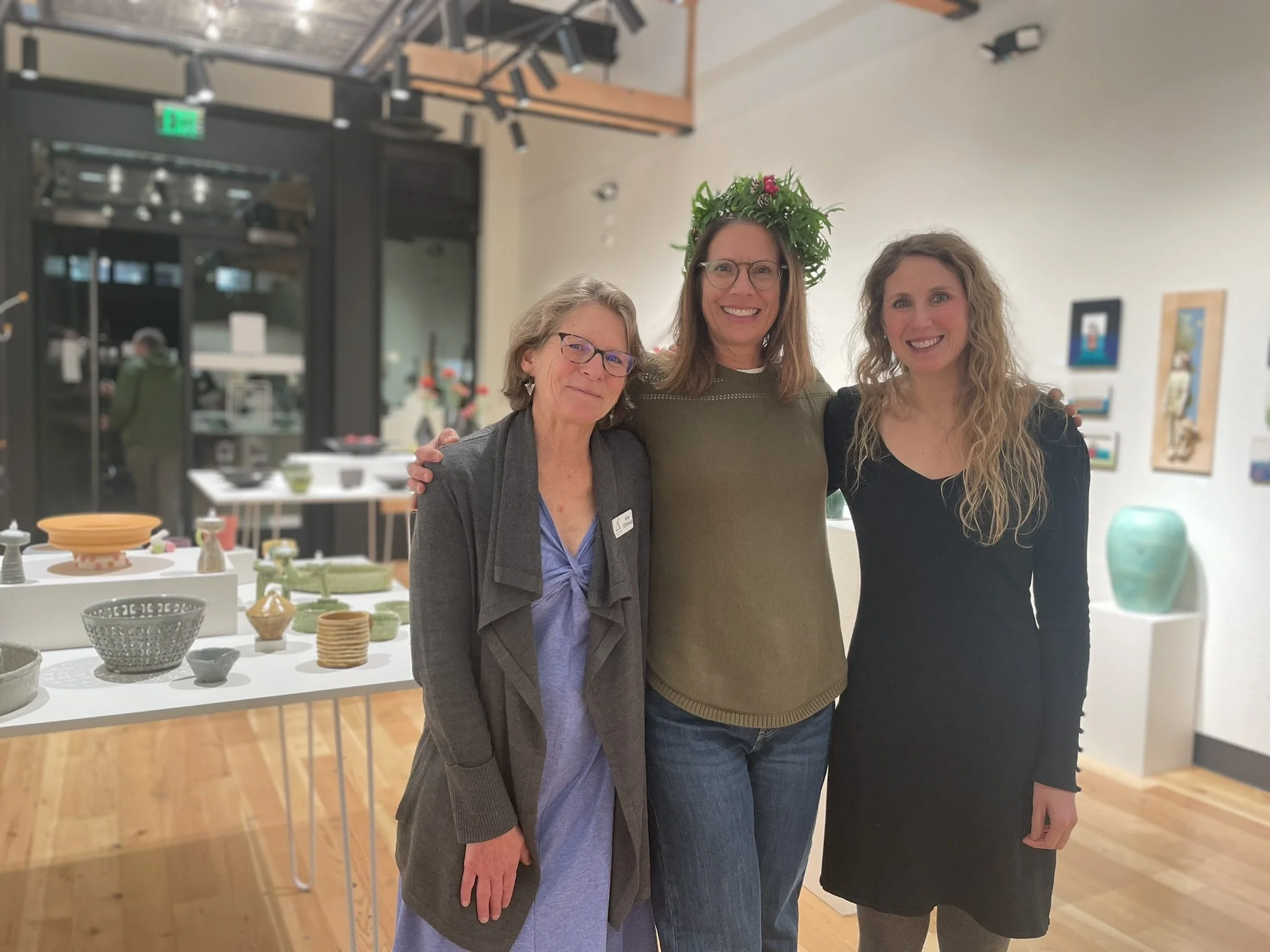
Amy Cilimburg (Climate Smart Missoula’s Executive Director), Karen Sippy (Former Executive Director of TFM) and Susan Teitelman (TMF Program Lead and Resilience Specialist, Climate Smart Missoula)